




ESG
Environmental, Social and Governance
Demand for transparency on socially responsible practices is on the rise. Corporates are being held accountable to various stakeholders on the impact of their operations in the community and the world at large. ESG criteria have become an increasingly important topic for a list of core stakeholders ranging from companies, investors, financiers, customers, employees, and non-governmental organizations.
ESG is one of the most important topics on the Board agenda these days. Key stakeholders are now expecting that ESG or Sustainability reporting will be part of a company’s ongoing reporting process and will form a key consideration for their relationship with the company.
The term ESG is often interchangeably used with sustainability, considering that both have the same objectives of improving a company’s business practices by boosting its competitiveness and winning confidence of the investors, customers, and regulators.
The ESG criteria are considered as the evolution and an integral part of the traditional sustainability reporting. It is a monitoring tool, strongly linked to the corporate long term strategy, the targets of which can be re-assessed on the basis of its annual progress.
Disclosing the firm’s ESG performance is linked to access to sustainable funding, easier penetration in new markets and, in general, improving those characteristics that increase competitiveness in the market.
*ESG reporting guidelines refers to the disclosure of data and indicators covering the firm’s operations in three areas: Environmental, Social and Corporate governance.

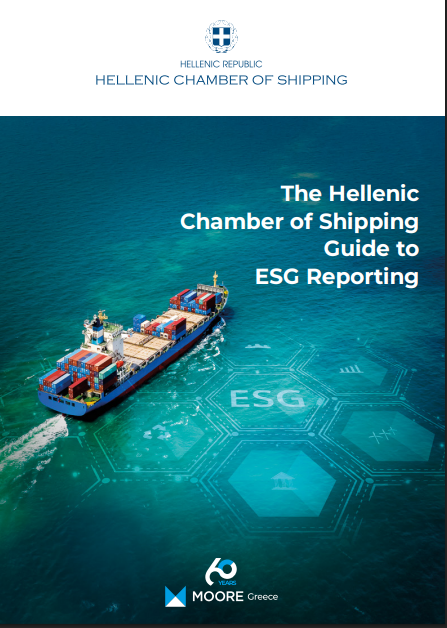 Hellenic Chamber of Shipping – Download the Guidelines
 Pinelopi Kassani, BA MA FCA CPA(GR) Governance, Risk and Compliance Partner